Brown Ware and Buff Ware Sherds from Old Town San Diego State Historic Park

Analysis of the Pottery from the Casa de Machado y Silvas and the Eugenia Silvas Sites

Susan M. Hector, Ph.D.

Center for Research in Traditional Culture of the Americas

Brown ware and buff ware sherds from the Casa de Machado y Silvas and the Eugenia Silvas (Silvas-McCoy site) homes in Old Town San Diego State Historic Park were analyzed. The analysis used the methodology developed during the Harkleroad study. Residue analysis was conducted on sherds from the Eugenia Silvas home and from selected sherds collected at the Casa de Bandini during previous excavations. The results of the analysis indicated that cooking and bulk item storage in ceramic vessels was present at both locations. Residue from cooking acorn meal was found on sherds from both the Eugenia Silvas and Bandini homes, indicating continuity in traditional Kumeyaay diet into the historic (Californio) period.

This paper is available on Academia.edu or by request.

New CRITCA Book on Historic Textile Production is Available

Textile Production in Historic California 1769 – 1869 by Dr. Susan Hector is in print! We anticipate having copies available by November 1, 2024. The 91-page spiral bound full color book describes how textiles were made during this period of time in California, and includes chapters on fiber preparation, spinning, weaving, dyeing, knitting, embroidery, and sewing. Research sources are included for each subject area, and extensive endnotes with citations are provided. A limited number of copies are available for the cost of production.

Lectures and Events in 2023

The Center has scheduled six lectures and events for 2023. We invite you to participate and attend.

February 11, 2023. Dr. Hector will be participating in the 200th anniversary celebration of Los Penasquitos Ranch House Adobe, listed in the National Register of Historic Places, by presenting a lecture. The County of San Diego plans special events all month.

March 16 – 19, 2023. Dr. Hector and Mr. Sampson will be giving a paper at the Society for California Archaeology Annual Meeting (Oakland) on Presenting Archaeology to the Public with Living History Programs.

May 7, 2023. Dr. Hector will give a workshop on flax production for the San Diego Creative Weavers Guild. The presentation will include a demonstration.

May 20, 2023. Dr. Hector will give a presentation to the Mayflower Society on Textile Production in the English Colonies of America 1620 – 1776.

June 15, 2023. Mr. Sampson will give a Zoom lecture through the San Diego Archaeological Center on his research in Anza-Borrego Desert State Park.

August 10, 2023. Dr. Hector will give a Zoom lecture through the San Diego Archaeological Center on Textile Production in California During the Spanish and Mexican Periods 1769 – 1848.

This list will be updated as other activities are planned.

CRITCA Support for the Restoration of the Casa de Machado y Silvas, Old Town San Diego

In May, 2021, the CRITCA board voted to support the restoration of deteriorating exterior walls at the Casa de Machado y Silvas, which is located on the plaza in Old Town San Diego. The board gave a grant of $2,000 to the Boosters of Old Town San Diego State Historic Park (BOOT). BOOT donated $3,750 and a private donor contributed $1,750 for a total project cost of $7,500. The contractor will patch and repair cracks and holes in the historic building. The restoration project will make repairs and replaster the wall to retain structural integrity of the building. This project will be completed  during the summer of 2021.

The building, also known as the Commercial Restaurant, was built in the early 1840s for Maria Antonia Machado. There may have been an adobe structure on the site that was expanded and repaired at that time. Maria Antonia and her family lived in the back rooms of the adobe home after she turned the front rooms into a restaurant in the early 1850s. The restaurant served whatever Maria Antonia was cooking that day; sailors and traders purchased a ticket for a meal and ate what was served. The restaurant had a bar and offered gambling. The home was also called Casa de la Bandera because of the family story that Maria Antonia rushed out of the house and pulled the Mexican flag off the flagpole to save it as the Americans were coming into Old Town after the Battle of the Beach Road (October 1846).

2020 ACCOMPLISHMENTS BY THE CENTER FOR RESEARCH IN TRADITIONAL CULTURE OF THE AMERICAS

As was true for most nonprofit corporations, CRITCA activities were reduced in 2020 due to the effects of the COVID-19 pandemic. Museums and research facilities were closed after March, and contact was limited to remote or virtual methods. However, we are happy to report to our supporters that we did make progress and that we have a strong plan for 2021. Here are the highlights of what we accomplished in 2020.

Archaeology Exhibit:

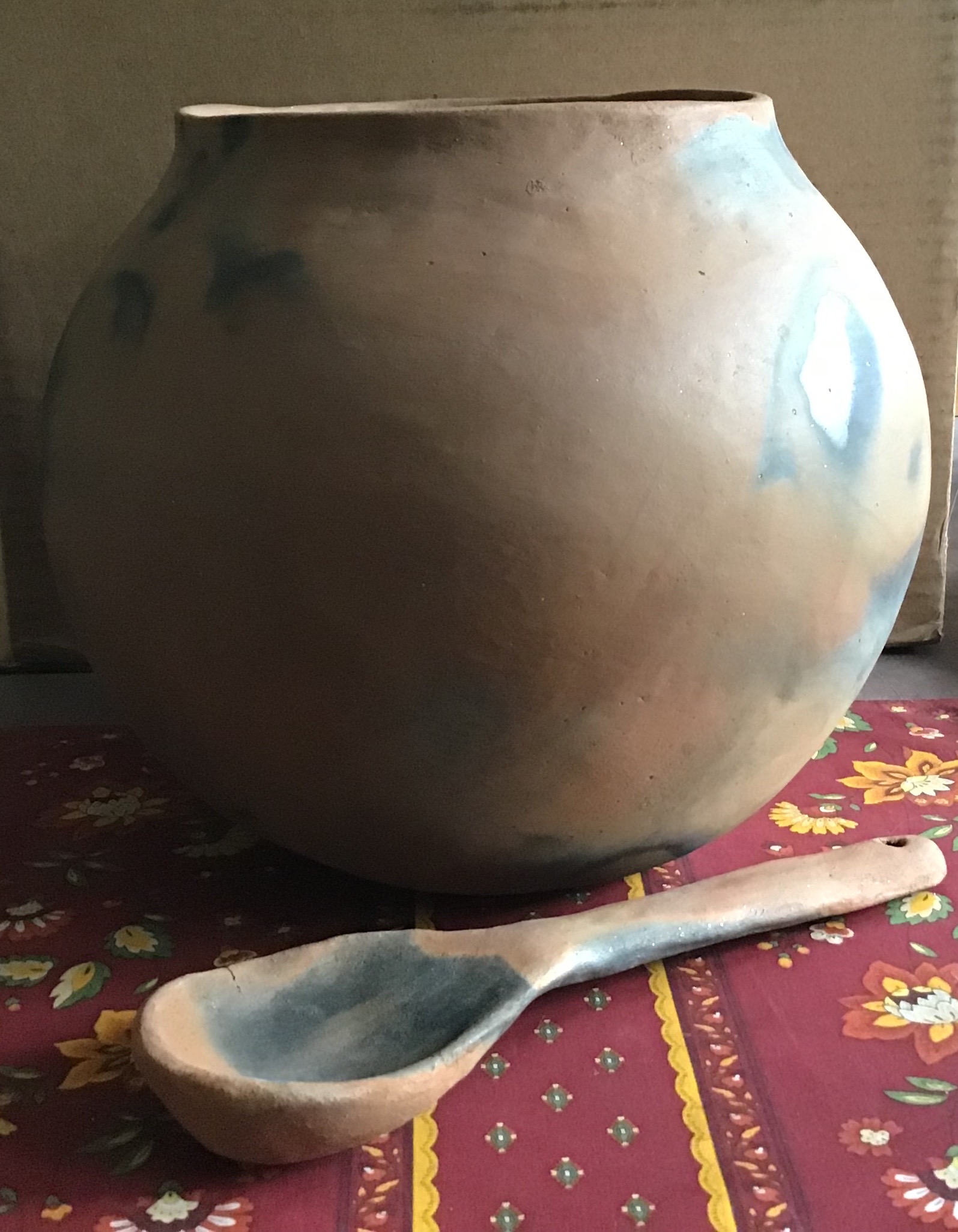
The Center for Research in Traditional Culture of the Americas (CRITCA) assisted California State Parks staff in the creation of an exhibit about archaeology in Old Town San Diego State Historic Park (SHP).  The exhibit contains a traditional brownware cooking vessel, dietary animal bone collected from historic-period archaeological sites within the park, potsherds (pieces of Native ceramic vessels) collected from historic-period sites in the park, and a reconstructed traditional Californio-era cooking hearth.  CRITCA arranged for a potter who lives in Baja California to produce a traditional brownware cooking vessel and ceramic ladle for use in this exhibit.  The exhibit specifically depicts traditional historic-period Californio cooking practices.  CRITCA conducted historical research and research on archaeological findings to support the exhibit and thus ensure it is historically accurate.  The exhibit is in place on the first floor of the Cosmopolitan Hotel in Old Town San Diego SHP; with the park closed due to the pandemic, the exhibit is not currently available for viewing.

Presentation at Archaeology Weekend at Anza-Borrego Desert State Park:

Dr. Susan Hector, representing CRITCA, made a presentation with Powerpoint slides at a California State Parks public event on February 29, 2020.  The Archaeology Weekend event, free to the public, was held at the Anza-Borrego Desert State Park Visitor Center.  The subject of this 40-minute presentation was the results of a pilot study of 135 Native American ceramic vessels from the Carl Harkleroad ceramic vessel collection curated at the San Diego Museum of Us (formerly Museum of Man).  The public event took place just prior to restrictions upon public gatherings imposed by the State of California and the County of San Diego Public Health Officer due to the pandemic. 

Analysis of Plant Residue from Native American Potsherds:

Residues representing the remains of plant foods and liquids were extracted from potsherds collected during archaeological excavations at both the Casa de Bandini/Hotel Cosmopolitan and from the Eugenia Silvas/James McCoy House Site.  The Casa de Bandini potsherds are on loan to CRITCA from the San Diego Archaeological Center, while CRITCA borrowed the Eugenia Silvas/James McCoy House site potsherds from the Statewide Museum Collections Facility in Sacramento.  Both of the latter sites are located within Old Town San Diego SHP.  An anthropology graduate student at University of California Santa Barbara is conducting the residue analysis; however, the study remains incomplete due to pandemic restrictions.  The lab did extract the residues from the archaeological specimens prior to the pandemic, but a full study of those residues cannot yet be completed.  Originally, CRITCA had anticipated completion of the residue study by June 2020.

Donations Made by CRITCA:

CRITCA made a donation to help purchase medical supplies for the Dine’ people, specifically for use in a hospital on the Navajo reservation.  Many Dine’ Elders have been directly affected by COVID-19 or are thought to be highly vulnerable to the virus and its health effects.  The current public health crisis as a consequence has left knowledge of traditional culture at-risk on the Navajo Reservation.

CRITCA has set aside $2,000.00 for a historic preservation project within Old Town San Diego SHP.  The CRITCA Board would consider augmenting the above amount in 2021.  CRITCA is currently evaluating potential restoration projects for funding.

Research Articles Prepared by CRITCA:

CRITCA is currently preparing an article on prehistoric Native pottery sealing and repairs based upon observations made during our study of the Carl Harkleroad ceramic vessel collection.  Sealing refers to the materials and methods employed by the pottery users to seal up the mouths of storage vessels for protection of its contents.  Repair refers to techniques and materials used by prehistoric people to fix breaks in the body of a vessel.  The relatively large study sample size of whole vessels provided by the Carl Harkleroad collection represents an extraordinary research opportunity that is not commonly available to researchers.

CRITCA conducted research and wrote a scholarly paper on the economic plants of 19th century Californio people, with emphasis upon families who resided in present-day Old Town San Diego State Historic Park.  Upon completing this research, CRITCA submitted the paper to State Parks for use as background information on appropriate plants for gardens in Old Town San Diego State Historic park.  The paper describes food plants that would have been grown in a typical Californio kitchen garden (1821 – 1850). 

At the specific request of California State Parks staff, CRITCA conducted research on where the average Californio woman obtained her clothes.  CRITCA has conducted considerable research on Californio traditional textiles and traditional tools used in fiber preparation and clothes production.  The resulting article was submitted to parks staff for their use in determining appropriate (historic) period attire. 

Mr. Sampson submitted a 200-page monograph on the archaeology of Anza-Borrego Desert State Park to staff in California State Parks headquarters for potential publication.  He has been told the monograph is under review at this time.  Mr. Sampson has also been intermittently working on other research articles that are in varying stages of completion.  He is currently writing background information (location, previous archaeological studies, history of the sites, etc.) for the CRITCA research on Native ceramic artifacts and stone artifacts from the Eugenia Silvas/James McCoy House site and the Casa de Bandini/Cosmopolitan Hotel.  This project includes the residue study alluded to above. 

We hope that 2021 will allow us to complete the research that was not possible in 2020. Our plan is to move forward this year to support independent research and publication.

Archaeology Exhibit in Old Town San Diego State Historic Park

Traditional Cooking Pot and Ladle Made by Tirsa Flores Castro

CRITCA worked with state park staff to develop an exhibit that incorporates archaeological materials to explain how food was prepared in San Diego during the time it was a Mexican town. The project included original research by CRITCA on what foods were consumed and how they were prepared. It will be seen by thousands of visitors to the state park.

The goal of the exhibit is to inform and educate the public on what types of food were commonly prepared in Californio household kitchens by using data from the archaeological excavations at the Casa de Bandini (now the Cosmopolitan Hotel). The excavations were conducted as part of a restoration project. The focus is on the foods and their preparation rather than serving and dining. A small exhibit case will hold materials related to Californio food preparation:

–Archaeological examples of brownware cooking vessels from the Casa de Bandini kitchen excavations housed at San Diego Archaeological Center (SDAC)
–Archaeological specimens of butchered cow bone (from the Casa de Bandini kitchen excavations housed at SDAC)
–Period illustrations of people cooking during the Californio period
–Examples of commonly prepared foods:
Pinto beans
Peppers
Onions
Corn (hominy and tortilla)
Sonora wheat (bread and tortilla)
Meat (beef) roasted on a skewer
–Period descriptions and archaeological information about the food that was prepared. For example, that meat was eaten roasted and most foods were prepared in liquid and cooked over an open fire in round-bottomed brownware cooking vessels sitting on stones.
–Period appropriate tools, such as a metal cleaver made by the Old Town blacksmiths

Labor to select the archaeological specimens and provide background research for the exhibit content and text was provided by Dr. Susan Hector and Mr. Michael Sampson, Center for Research in Traditional Cultures of the Americas. This effort included extensive research on historic brownware, foods prepared during the Californio period, and cooking methods.

The building now known as the Cosmopolitan Hotel was originally constructed between 1827 – 1829 by Don Juan Bandini for his family. The Bandini family lived in their single story adobe home for 30 years. The fortunes of the Bandinis declined after California became part of the United States and the building was purchased by Albert Seeley in 1859. He added a second wood frame story and turned the home into a hotel. The hotel operated until its sale in 1887 due to a decline in Seeley’s stagecoach business. The railroad had come to Old Town and big changes were underway in San Diego.

In 2004, the State began developing a plan to rehabilitate the building. Archaeological studies from 2007 – 2010 were part of the proposed work, and many important discoveries were made. Animal bone and pottery were found in what had been the kitchen of the Bandini family home. Analysis and interpretation of these discoveries enabled archaeologists to understand and explain how and what types of foods were prepared for the family. This information, in turn, tells us how people lived in Old Town when it was still part of the nation of Mexico.

Many of the people who lived and worked in Old Town were Natives of the area, representing the Kumeyaay and other tribes. The cooks who worked for the Bandini family were most likely Kumeyaay men and women. They adapted their traditional pottery cooking vessels to prepare a variety of new foods. These meals, which always included beans, were cooked in pots over an open fire, and meat was roasted on skewers and forks. Tortillas, made of corn and flour, were cooked on griddles. Peppers and onions were added to the beans as desired. Occasionally small chunks of leftover meat and bone were included in the stew.

In addition to donated research labor, the Center funded residue analysis on a selection of brownware sherds from the Bandini kitchen (Cosmopolitan Hotel excavations) and the Silvas-McCoy home to identify what types of foods were cooked in Californio kitchens. CRITCA submitted samples to the ethnobotany lab at University of California, Santa Barbara, for analysis. The lab was asked to look for evidence of the foods most commonly cooked in pots.

CRITCA commissioned a traditional style cooking vessel for the exhibit. The cooking pot and ladle were made for the exhibit by Tirsa Flores Castro and donated to State Parks by CRITCA.


We thank our CRITCA donors whose support made this project possible. Funding for this project was also provided by participating individuals and organizations:
Boosters of Old Town San Diego State Historic Park (BOOT)
Daughters of the American Revolution, San Diego Chapter
NWB Environmental Services
ASM Affiliates
Stephen Van Wormer

The project could not have been completed without assistance by:
San Diego Archaeological Center
Tirsa Flores Castro, Santa Catarina, Baja California, Mexico
Special thanks to Mike Wilken for facilitating acquisition of the pot and ladle

And of course thanks to California State Parks staff for encouraging and supporting this project, particularly Amy Lew and Nicole Turner. Your commitment inspires us.

McCoy-Silvas Pottery Analysis

In April, 2018, we began an analysis of potsherds from the McCoy-Silvas site in Old Town San Diego State Historic Park. The purpose of the analysis is to test the results of the Harkleroad pilot study using archaeological material. The McCoy-Silvas collection is ideal for this purpose because the brownware body sherds are well preserved, associated with residential locations where cooking and storage would be expected, and dated to 1830s-1840s. Native people living in the Californio community of San Diego produced the pottery using traditional and nontraditional techniques. The analysis includes identification of attributes such as fire clouding, charring, wipe marks, rim shape (if present), and firing method. We also have received permission to submit selected sherds for organic residue analysis and are seeking funding for this special study. The photo below shows an ideal candidate for residue analysis (metric scale). What was being cooked in Old Town in the early 19th century?

Yokuts Pottery Research

This study focuses on the southern Central Valley ceramic tradition, which is isolated from the far southwestern tradition and existed only in a restricted area occupied by the Yokuts and Western Mono people of the western Sierra Nevada foothills. Minimal research has been done on this ceramic tradition; Anna Gayton’s work with collections and in the field in the 1920s stands as the most thorough coverage of the subject to date. In 1990, William Wallace summarized Gayton’s work in a paper prepared for a conference.

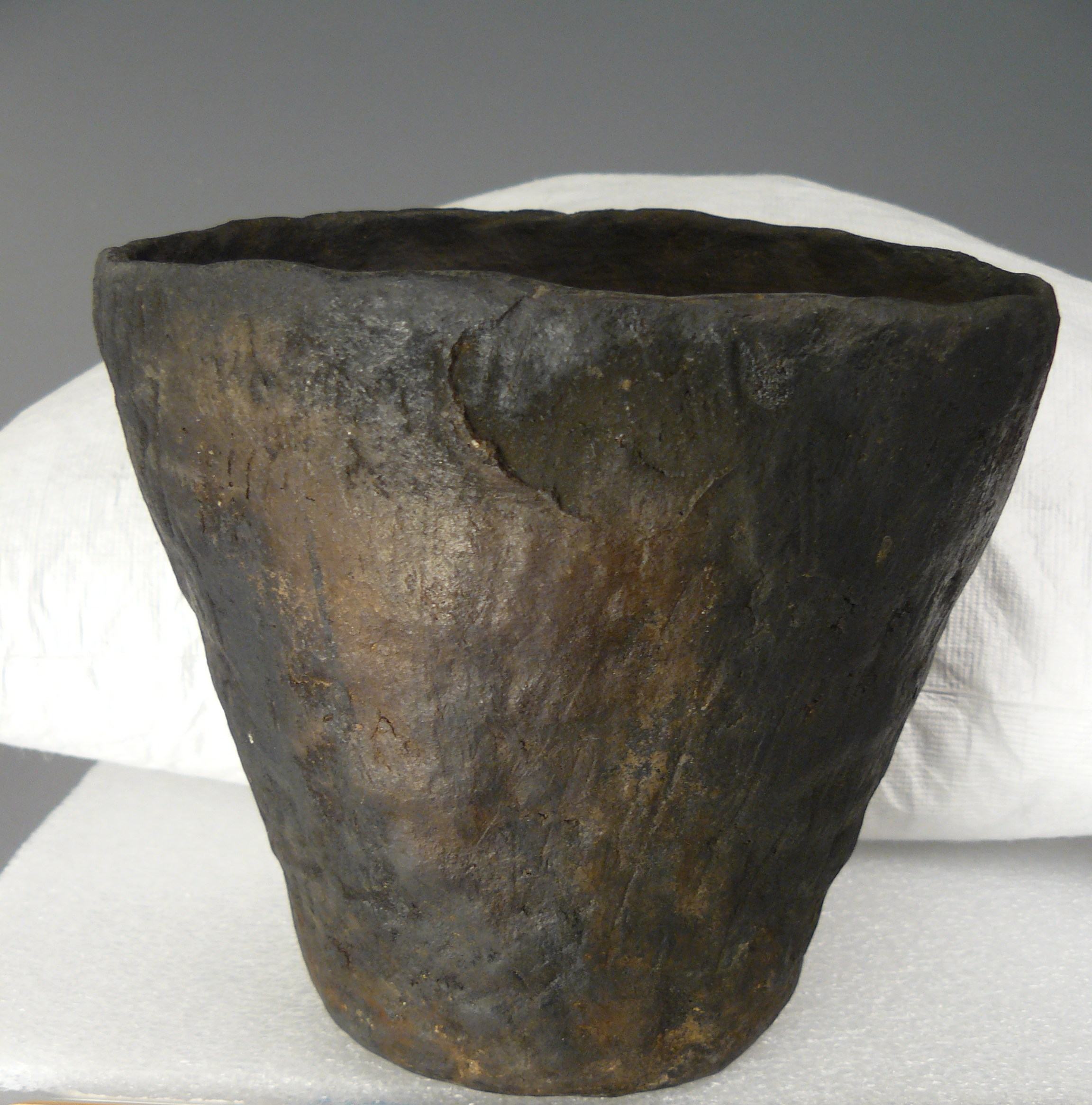
Yokuts pottery is coiled, but the coils are scraped or wiped rather than joined using a paddle and anvil. The vessel is formed in a basket base, and most pots are flat on the bottom. Some have small tabular handles near the rims. Many have been treated on the exterior, whether used for cooking or other purposes.

P1070781
SIM #082-190-183 (photograph by Michael Sampson)

We were able to conduct analysis in person for one collection of Yokuts pottery vessels. In 2016, Christopher Corey, Senior State Archaeologist for California State Parks, brought to our attention that the State Indian Museum (SIM), located in Sacramento, housed a collection of Yokuts pottery. Over a period of two days in April, 2018, we conducted detailed analysis of 16 vessels. The work was coordinated by Nancy Jenner, Curator, SIM, and we were supported by her staff members Pepper Youngs, Nikola Sanguinetti, Edgar Huerta, and Ursula Filice. Their assistance was crucial, and consisted of retrieving and unpacking the pots, assisting with measurements and descriptions, and facilitating photography.

The Yokuts pots at the SIM had limited information about provenience, and no information about the collector(s). Therefore it is not known when they were collected, but the first quarter of the 20th century is a reasonable guess. They were most probably donated by private individuals to the state following discovery.

We also studied other collections of Yokuts vessels housed at the Phoebe Apperson Hearst Museum of Anthropology, the Field Museum, and Sequoia National Park through information in museum catalogs and photographs. In total, our research included 69 complete Yokuts vessels. Since there is no typology for Yokuts pottery, we developed one based on function and form of the vessel.

A report is in preparation describing in detail the 16 vessels at the SIM as well as our observations about the other pots in museum collections. We believe that this report will be a significant contribution to the understanding of Great Basin and California pottery.

Documentation of Harkleroad Collection Completed

The Center completed documentation of 467 southern California/northern Baja California pottery vessels housed at the San Diego Museum of Man. Known as the Harkleroad collection, most of the pots are complete and represent a unique opportunity to photograph, measure, and record a variety of attributes. Analysis is underway, and information about the pilot study and preliminary results will be available at the upcoming Society for California Archaeology meetings in San Diego. The Center would like to thank our interns, Museum staff, and our tribal participant who is an expert in traditional knowledge about Native pottery. She will be the recipient of a Center grant to support preparation of a report on her observations during the documentation process.